

Where:
Accrint: Accrued interest expressed in cross currency.
Amount: The entered (signed) amount from the left-hand side of the Deal desk.
Premium: The entered swap points from the left-hand side of the Deal desk.
No.ofdays1: The number of calendar days between the entered value date and the entered maturity date. No.ofdays2: The number of calendar days between the entered value date and the balance date.
3. Rate Di5erential (RateDi5) Component: Captures the impact of changes in interest rates between the two involved currencies during the trade date and the test date.

Where:
NominalAmount: The nominal amount of the foreign currency involved in the transaction.
Rate(o): The current observed foreign exchange rate.
OB-remaining: The remaining part of the forward premium (swap points) on the observed balance (OB) date.
Interpolation of Forward Swap Points
ZenTreasury uses a linear interpolation method

Where:
FwdRate: The interpolated forward FX rate for the desired tenor. If the RateLong is missing, use the current FX spot rate; if not, use the Interp.Rate. Tenor: The tenor for the desired interest rate, expressed in calendar days.
RateShort: The rate for the point on the curve with the next shorter tenor than the Tenor.
RateLong: The rate for the point on the curve with the next longer tenor than the Tenor.
TenorShort: The tenor in number of calendar days for the point on the curve with the next shorter tenor than the Tenor. TenorLong: The tenor for the point on the curve with the next longer tenor than the Tenor.
This formula is used to interpolate forward foreign exchange (FX) rates when a specific Tenor point is not directly observable on the yield curve. It calculates an estimated forward rate (Interp.Rate) by adjusting the shorter-term rate (RateShort) with a proportion of the diBerence between the longer-term rate (RateLong) and RateShort, scaled by the relative distance between the Tenor, TenorShort, and TenorLong.
The FwdRate will be equivalent to the current FX spot rate if RateLong is unavailable; otherwise, it will be set to the Interp.Rate resulting from the interpolation. This approach ensures that the estimated rate aligns with the general trend of the curve between the nearest known points (RateShort and RateLong) while adjusting for the specific Tenor desired.
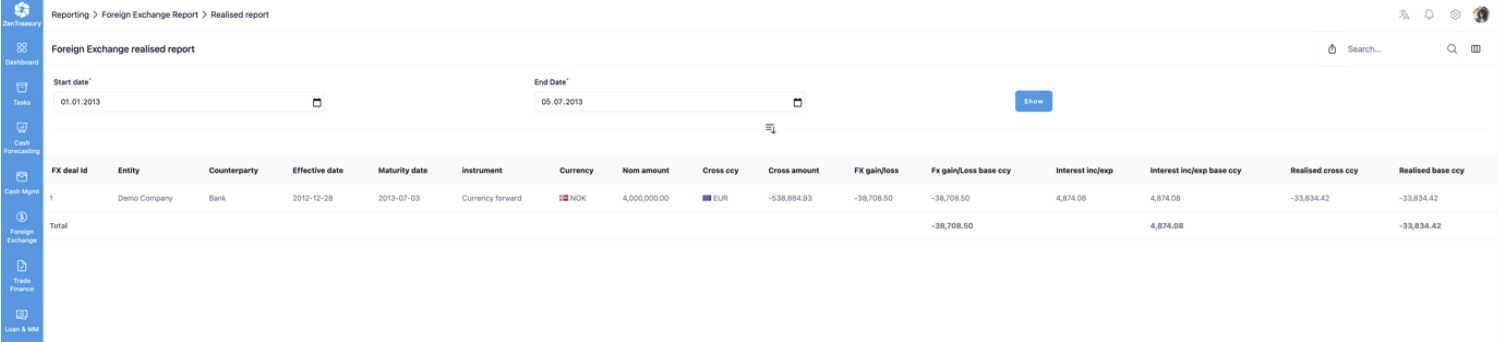
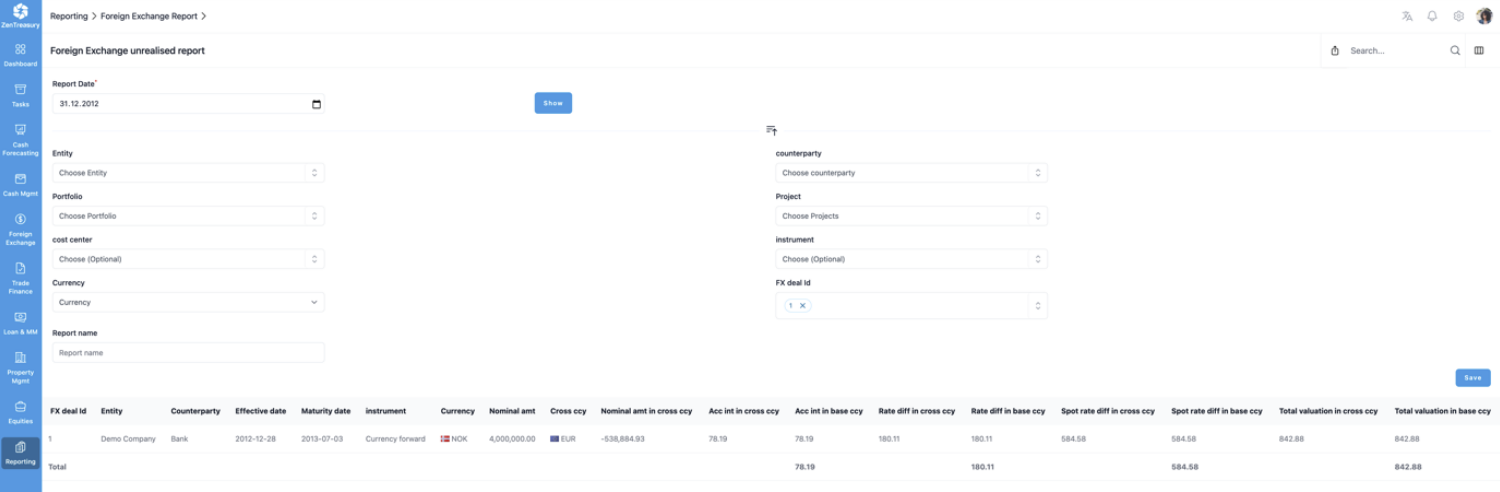
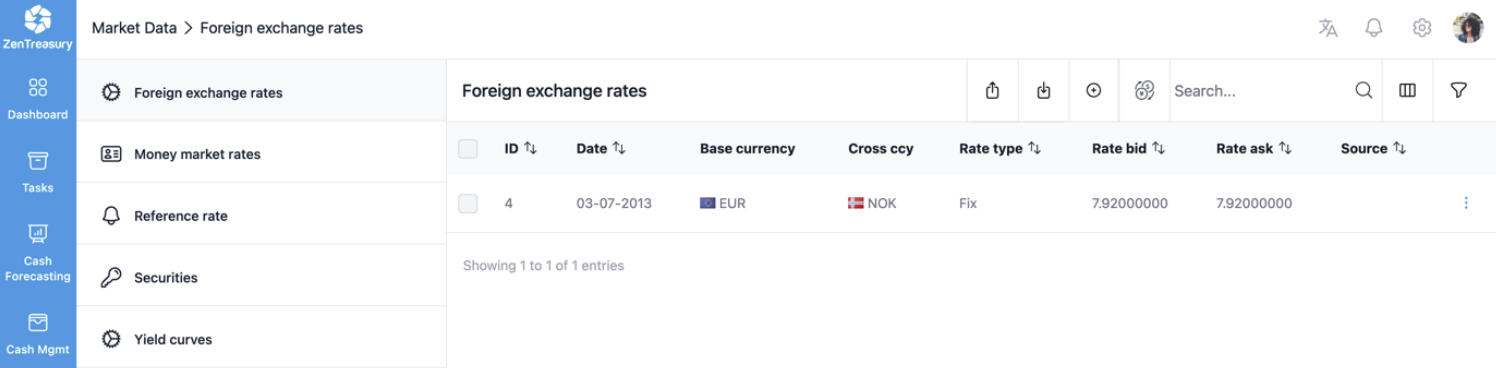
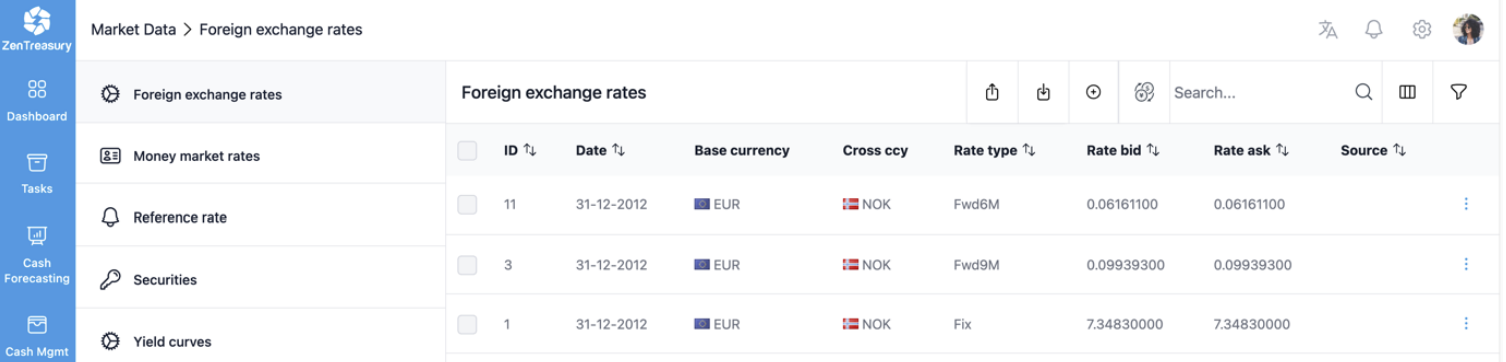
Example calculation: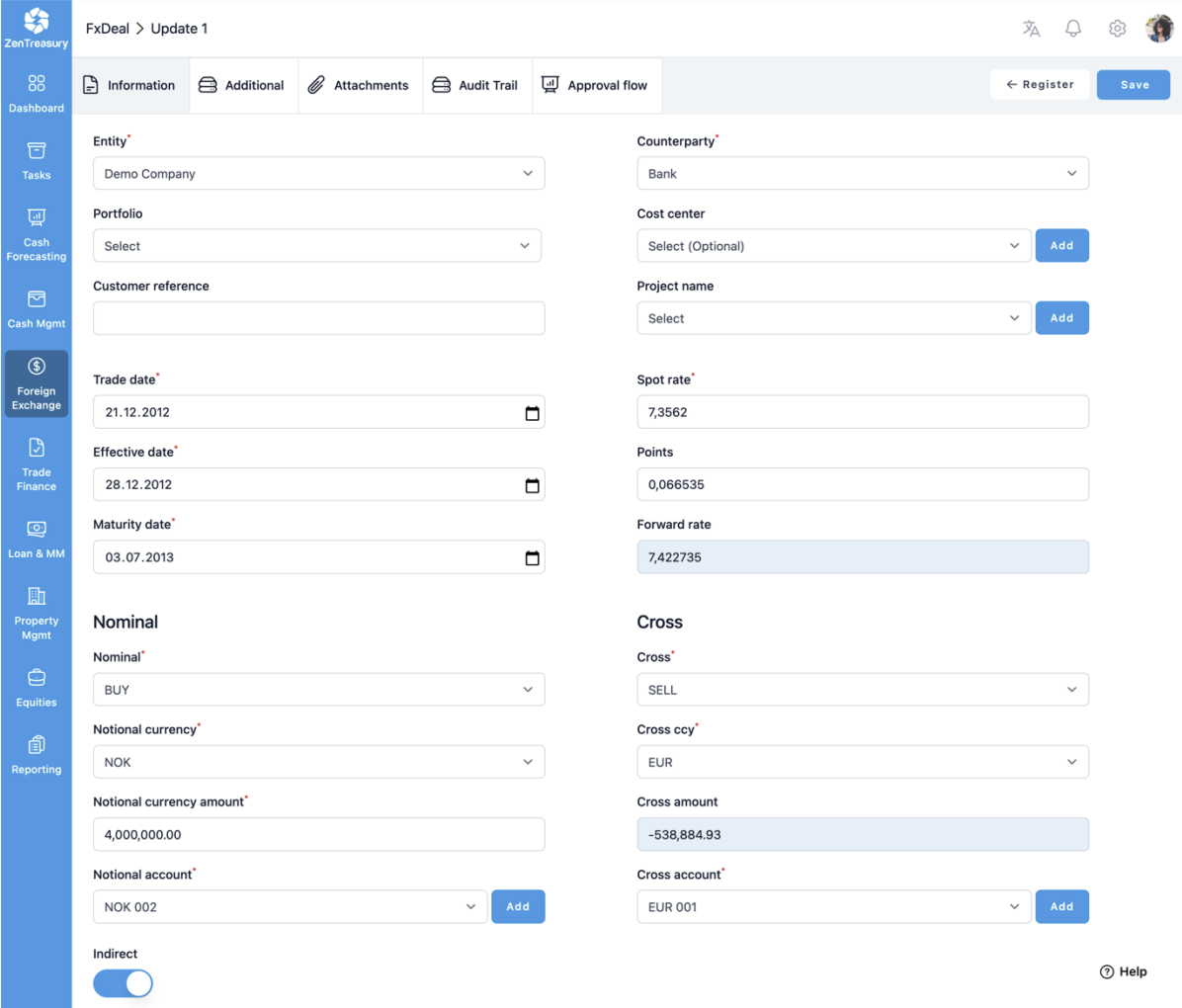
Was this article helpful?
That’s Great!
Thank you for your feedback
Sorry! We couldn't be helpful
Thank you for your feedback
Feedback sent
We appreciate your effort and will try to fix the article